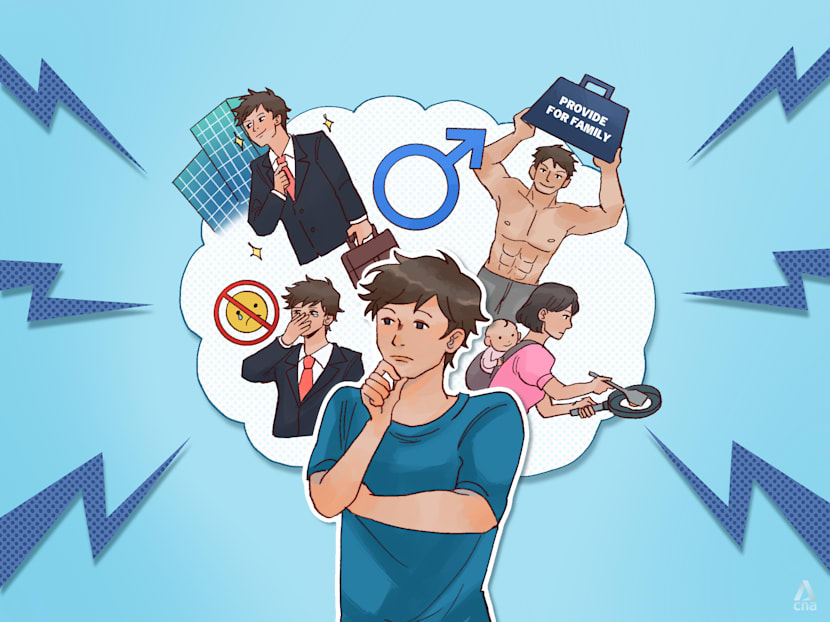
In the age of the manosphere, perhaps we need broader definition of masculinity
͏ ͏ ͏ ͏ ͏ ͏ ͏ ͏ ͏ ͏ ͏ ͏ ͏ ͏ ͏ ͏ ͏ ͏ ͏ ͏ ͏ ͏ ͏ ͏ ͏ ͏ ͏ ͏ ͏ ͏ ͏ ͏ ͏ ͏ ͏ ͏ ͏ ͏ ͏ ͏ ͏ ͏ ͏ ͏ ͏ ͏ ͏ ͏ ͏ ͏ ͏ ͏ ͏ ͏ ͏ ͏ ͏ ͏ ͏ ͏ ͏ ͏ ͏ ͏ ͏ ͏ ͏ ͏ ͏ ͏ ͏ ͏ ͏ ͏ ͏ ͏ ͏ ͏ ͏ ͏ ͏ ͏ ͏ ͏ ͏ ͏ ͏ ͏ ͏ ͏ ͏ ͏ ͏ ͏ ͏ ͏ ͏ ͏ ͏ ͏
Dear readers,
What does it mean to be "man enough" today?
As a mother to a boy on the cusp of adolescence, it's a question I've been thinking about a lot.
When I was growing up it seemed we were on a progressive trajectory, with each generation shedding traditional beliefs about gender roles and embracing more equal partnerships at home.
But these days, it seems young men may be looking to turn back the clock.
Recent studies from around the world and in Singapore, including a new one from gender equality advocacy group AWARE, show that young men are more likely than older generations to believe caregiving is women's work, and that showing emotions like fear and sadness is a sign of weakness.
In this week’s Big Read, we explore why this may be the case, speaking to men across generations about the influences shaping their ideas of manhood.
They spoke not only of their own fathers and families, but also about male influencers such as Andrew Tate and the online “manosphere”.
And we ask a bigger question: Are young men really becoming more regressive, or are we witnessing a generation still figuring out what masculinity means to them?
Read on to find out more.
Yours faithfully,
Yasmine Yahya
Deputy Chief Editor, CNA Digital (TODAY, Lifestyle & Luxury)
|
|
|
|
ADVERTISEMENT
 |
|
|
ADVERTISEMENT
 |
|
|
|
|
|