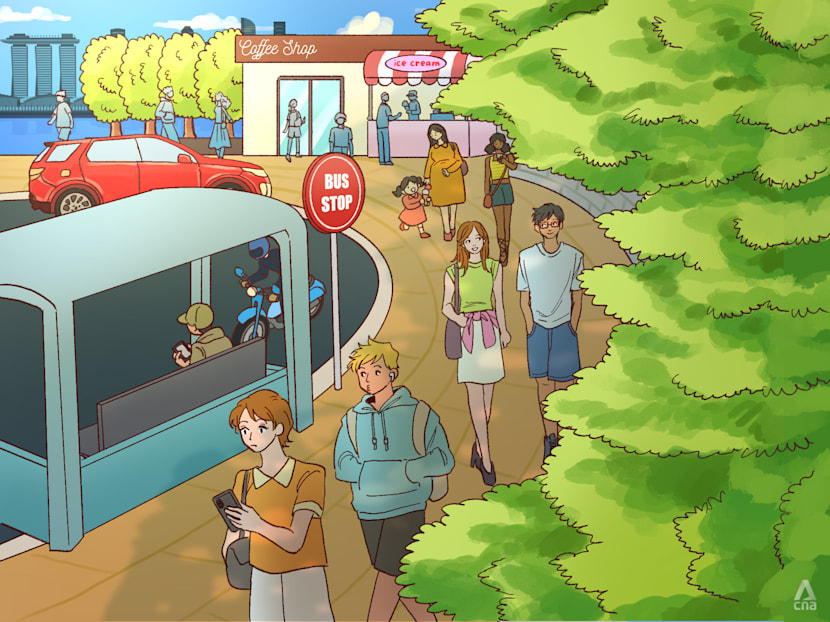
Despite accessible walkways, heat and convenience are keeping people from clocking in steps.
͏ ͏ ͏ ͏ ͏ ͏ ͏ ͏ ͏ ͏ ͏ ͏ ͏ ͏ ͏ ͏ ͏ ͏ ͏ ͏ ͏ ͏ ͏ ͏ ͏ ͏ ͏ ͏ ͏ ͏ ͏ ͏ ͏ ͏ ͏ ͏ ͏ ͏ ͏ ͏ ͏ ͏ ͏ ͏ ͏ ͏ ͏ ͏ ͏ ͏ ͏ ͏ ͏ ͏ ͏ ͏ ͏ ͏ ͏ ͏ ͏ ͏ ͏ ͏ ͏ ͏ ͏ ͏ ͏ ͏ ͏ ͏ ͏ ͏ ͏ ͏ ͏ ͏ ͏ ͏ ͏ ͏ ͏ ͏ ͏ ͏ ͏ ͏ ͏ ͏ ͏ ͏ ͏ ͏ ͏ ͏ ͏ ͏ ͏ ͏
Dear readers,
Let's be honest: in Singapore, it's easy to find reasons not to walk.
The heat and humidity can be punishing, and with efficient public transport, taking a bus for even just one stop often feels like the sensible choice.
And so for many, walking is an activity on its own - a form of exercise - rather than a way of getting around.
But what if we flipped that view? Content strategist Hong Chou Hui is one avid walker who's gained a lot from this mindset.
He walks for about two hours in his neighbourhood everyday for leisure. When meeting clients, he often alights a few MRT stops away from his destination and walks the rest of the way so he can explore new areas.
These walks have helped him discover hidden corners of his own neighbourhood, reconnect with old acquaintances and notice the little details of everyday life that often pass us by.
Experts also note that walking isn't just good for one's health. It brings cities to life and brings footfall to small businesses along pedestrian routes.
When enough people start walking regularly, what they create is a friendlier community and more liveable city.
In this week's Big Read, CNA TODAY takes a look at how far Singapore has come in building a walkable city and asks what it will take to nudge more Singaporeans to get on their feet.
Yours faithfully,
Yasmine Yahya
Deputy Chief Editor, CNA Digital (TODAY, Lifestyle & Luxury)
|
|
|
|
ADVERTISEMENT
 |
|
|
ADVERTISEMENT
 |
|
|
|
|
|