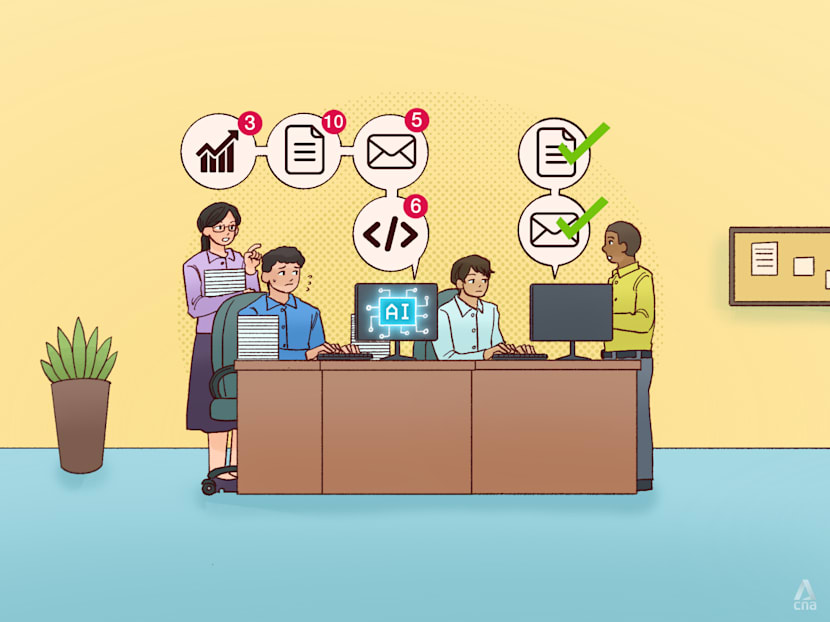
In a survey of Gen Z workers across Asia, many said their bosses demand more because of AI
͏ ͏ ͏ ͏ ͏ ͏ ͏ ͏ ͏ ͏ ͏ ͏ ͏ ͏ ͏ ͏ ͏ ͏ ͏ ͏ ͏ ͏ ͏ ͏ ͏ ͏ ͏ ͏ ͏ ͏ ͏ ͏ ͏ ͏ ͏ ͏ ͏ ͏ ͏ ͏ ͏ ͏ ͏ ͏ ͏ ͏ ͏ ͏ ͏ ͏ ͏ ͏ ͏ ͏ ͏ ͏ ͏ ͏ ͏ ͏ ͏ ͏ ͏ ͏ ͏ ͏ ͏ ͏ ͏ ͏ ͏ ͏ ͏ ͏ ͏ ͏ ͏ ͏ ͏ ͏ ͏ ͏ ͏ ͏ ͏ ͏ ͏ ͏ ͏ ͏ ͏ ͏ ͏ ͏ ͏ ͏ ͏ ͏ ͏ ͏
Dear readers,
How is artificial intelligence really changing the way young people work?
A Money Mind survey of more than 3,600 young adults across seven Asian markets offers some answers: A majority said AI has helped them complete tasks faster.
At the same time, more than half of respondents in every market (69 per cent in Singapore, 82 per cent in India and 85 per cent in China) said the time saved has often translated into heavier workloads and higher performance expectations.
Still, many are optimistic about AI. China and India, the two markets with the highest workplace AI use, also had the highest shares of respondents who said AI is beneficial for their careers, at 88 per cent each.
To better understand the stories behind the numbers, CNA TODAY spoke to 16 Gen Z workers across Asia about how AI is reshaping their daily working lives.
Their experiences and sentiments reflected the survey findings.
While some worry about being made obsolete by AI, others have already started making moves to make themselves more attractive to future employers, whether by improving their technical proficiency or brushing up on human skills such as communication, emotional intelligence and creativity.
In this week's Big Read, we take a closer look at these trends and explore what they mean for young workers today.
Yours faithfully,
Yasmine Yahya
Deputy Chief Editor, CNA Digital (TODAY, Lifestyle & Luxury)
|
|
|
|
ADVERTISEMENT
 |
|
|
ADVERTISEMENT
 |
|
|
|
|
|