Recent clashes suggest Singapore is still negotiating its comfort level with spontaneous public art.
͏ ͏ ͏ ͏ ͏ ͏ ͏ ͏ ͏ ͏ ͏ ͏ ͏ ͏ ͏ ͏ ͏ ͏ ͏ ͏ ͏ ͏ ͏ ͏ ͏ ͏ ͏ ͏ ͏ ͏ ͏ ͏ ͏ ͏ ͏ ͏ ͏ ͏ ͏ ͏ ͏ ͏ ͏ ͏ ͏ ͏ ͏ ͏ ͏ ͏ ͏ ͏ ͏ ͏ ͏ ͏ ͏ ͏ ͏ ͏ ͏ ͏ ͏ ͏ ͏ ͏ ͏ ͏ ͏ ͏ ͏ ͏ ͏ ͏ ͏ ͏ ͏ ͏ ͏ ͏ ͏ ͏ ͏ ͏ ͏ ͏ ͏ ͏ ͏ ͏ ͏ ͏ ͏ ͏ ͏ ͏ ͏ ͏ ͏ ͏
Dear readers,
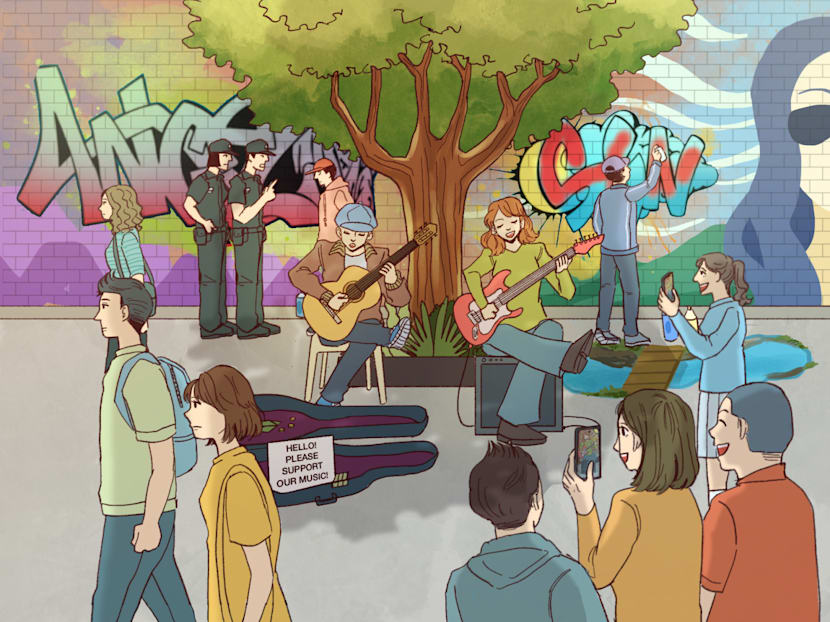
Singapore today has more murals, buskers and public art than ever before.
Yet several incidents in the past few years have shown that members of the public are not always accepting of such works, and that authorities carefully curate what can be depicted or performed.
Most recently, a work of art drawn on a walkway outside Mountbatten MRT station with a power jet was cleaned off following a complaint by a member of the public.
The incident carried echoes of the 2024 public debate over a mural of a smoking samsui woman on a wall in Chinatown.
The mural was eventually allowed to stay intact following a public outcry, although the building owner was fined S$2,000 for carrying out unauthorised works on a conserved building.
In this week’s Big Read, CNA TODAY explores the tensions between creativity and control in Singapore’s streetscape.
Artists say they have been given more opportunities and platforms, but also argue that a culture of caution among authorities, commissioning clients and the public, can limit what street art is allowed to be.
As Singapore seeks more vibrant public spaces, where should the boundaries lie, and who gets to decide?
Yours faithfully,
Yasmine Yahya
Deputy Chief Editor, CNA Digital (TODAY, Lifestyle & Luxury)
|
|
|
|
ADVERTISEMENT
 |
|
|
ADVERTISEMENT
 |
|
|
|
|
|