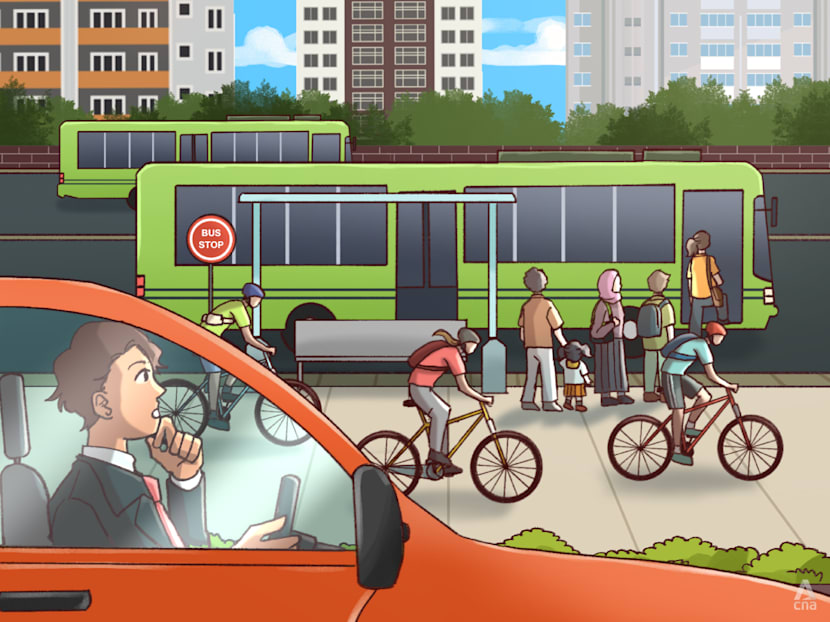
Singapore’s public transport has improved over the years, but why has the demand for cars remained firm?
͏ ͏ ͏ ͏ ͏ ͏ ͏ ͏ ͏ ͏ ͏ ͏ ͏ ͏ ͏ ͏ ͏ ͏ ͏ ͏ ͏ ͏ ͏ ͏ ͏ ͏ ͏ ͏ ͏ ͏ ͏ ͏ ͏ ͏ ͏ ͏ ͏ ͏ ͏ ͏ ͏ ͏ ͏ ͏ ͏ ͏ ͏ ͏ ͏ ͏ ͏ ͏ ͏ ͏ ͏ ͏ ͏ ͏ ͏ ͏ ͏ ͏ ͏ ͏ ͏ ͏ ͏ ͏ ͏ ͏ ͏ ͏ ͏ ͏ ͏ ͏ ͏ ͏ ͏ ͏ ͏ ͏ ͏ ͏ ͏ ͏ ͏ ͏ ͏ ͏ ͏ ͏ ͏ ͏ ͏ ͏ ͏ ͏ ͏ ͏
Dear readers,
Since 2014, Singapore has pursued a “car-lite” strategy.
This did not simply mean further curbing car ownership, as it has done since the 1970s.
It also meant expanding and improving public transport infrastructure so that these alternative modes of commuting became the preferred choice.
Twelve years on, the results are a bit of a mixed bag.
Bus and train networks have undoubtedly expanded. Infrastructure such as cycling paths and sheltered walkways have also improved comfort and convenience, and surveys continuously show high public satisfaction in Singapore’s public transport system.
But at the same time, the demand for cars has remained firm. In fact, the number of cars owned in Singapore has inched upwards over the years.
Is this a sign of policy limits, or simply a reflection of needs that cannot be designed away?
Dive into this weekend’s Big Read to find out.
Yours faithfully,
Yasmine Yahya
Deputy Chief Editor, CNA Digital (TODAY, Lifestyle & Luxury)
|
|
|
|
ADVERTISEMENT
 |
|
|
|
|
|
ADVERTISEMENT
 |
|
|
|
|
Mediacorp Pte Ltd, 1 Stars Avenue, Singapore 138507 |
|
|
|
|
|