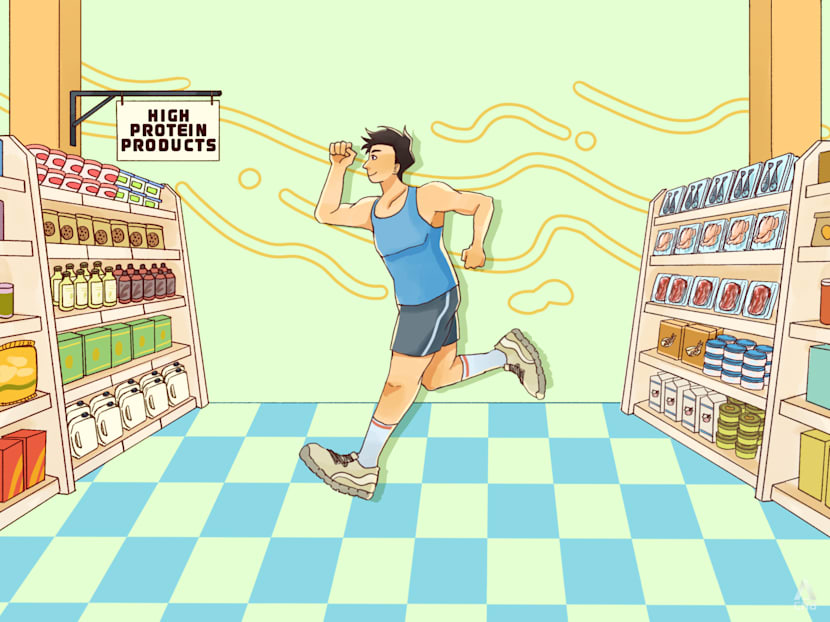
Products claiming to be high-protein are filling up Singapore’s supermarkets as a result of a booming fitness culture but experts warn that not all proteins are created equal.
͏ ͏ ͏ ͏ ͏ ͏ ͏ ͏ ͏ ͏ ͏ ͏ ͏ ͏ ͏ ͏ ͏ ͏ ͏ ͏ ͏ ͏ ͏ ͏ ͏ ͏ ͏ ͏ ͏ ͏ ͏ ͏ ͏ ͏ ͏ ͏ ͏ ͏ ͏ ͏ ͏ ͏ ͏ ͏ ͏ ͏ ͏ ͏ ͏ ͏ ͏ ͏ ͏ ͏ ͏ ͏ ͏ ͏ ͏ ͏ ͏ ͏ ͏ ͏ ͏ ͏ ͏ ͏ ͏ ͏ ͏ ͏ ͏ ͏ ͏ ͏ ͏ ͏ ͏ ͏ ͏ ͏ ͏ ͏ ͏ ͏ ͏ ͏ ͏ ͏ ͏ ͏ ͏ ͏ ͏ ͏ ͏ ͏ ͏ ͏
Dear readers,
Walk into any supermarket these days and it’s hard to miss “high in protein” labels plastered on a variety of products.
From yoghurt to cereal and even water, it seems like everything is promising a protein boost.
It’s not just on shelves, either. Scroll through social media and you’ll see influencers tracking their protein intake, sharing meal hacks and pushing protein-packed snacks.
Even my conversations with friends now inevitably include someone asking, “Are you getting enough protein?” – as if it is the solution to most health problems.
In this week’s Big Read, CNA TODAY looks at why protein has become the nutrient of the moment, how much we really need in our diets and if we are just buying into clever marketing.
Yours faithfully,
Maria Almenoar
Supervising Editor, CNA Digital (Features)
|
|
|
|
ADVERTISEMENT
 |
|
|
|
|
|
ADVERTISEMENT
 |
|
|
|
|
Mediacorp Pte Ltd, 1 Stars Avenue, Singapore 138507 |
|
|
|
|
|