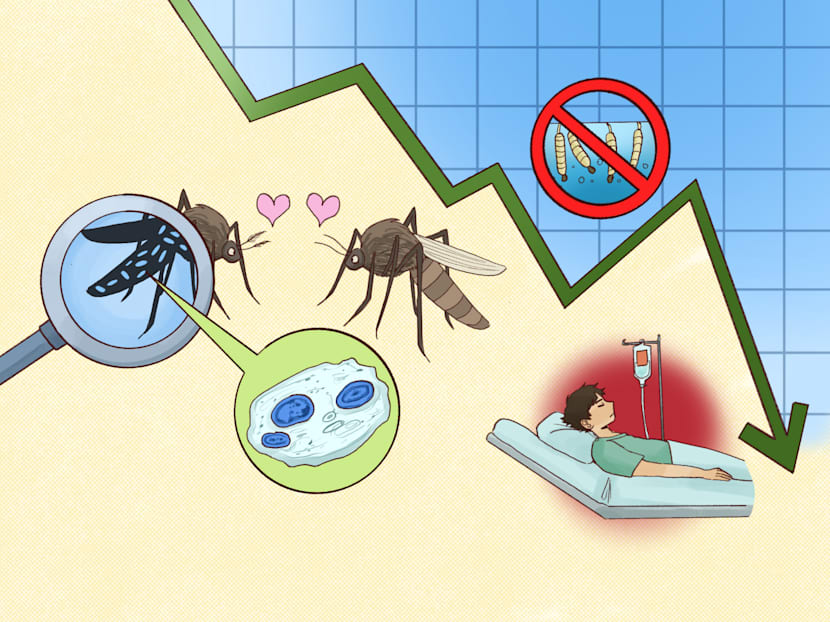
Experts are optimistic but cautioned about popping the champagne too early given perennial issues and emerging risks.
͏ ͏ ͏ ͏ ͏ ͏ ͏ ͏ ͏ ͏ ͏ ͏ ͏ ͏ ͏ ͏ ͏ ͏ ͏ ͏ ͏ ͏ ͏ ͏ ͏ ͏ ͏ ͏ ͏ ͏ ͏ ͏ ͏ ͏ ͏ ͏ ͏ ͏ ͏ ͏ ͏ ͏ ͏ ͏ ͏ ͏ ͏ ͏ ͏ ͏ ͏ ͏ ͏ ͏ ͏ ͏ ͏ ͏ ͏ ͏ ͏ ͏ ͏ ͏ ͏ ͏ ͏ ͏ ͏ ͏ ͏ ͏ ͏ ͏ ͏ ͏ ͏ ͏ ͏ ͏ ͏ ͏ ͏ ͏ ͏ ͏ ͏ ͏ ͏ ͏ ͏ ͏ ͏ ͏ ͏ ͏ ͏ ͏ ͏ ͏
Dear readers,
When I first heard that Singapore planned to release its own army of mosquitoes into the wild to curb the dengue scourge, I remember thinking: Surely this can’t end well.
A decade on, I have to eat my words. What once sounded like the plot of a science-fiction movie has become one of Singapore’s biggest public health success stories.
This novel strategy, called Project Wolbachia, has reduced the population of the Aedes aegypti mosquito by 80 to 90 per cent, in areas where it is used.
As of May 9 this year, there were just 593 reported infections, almost three times fewer than the 1,692 cases reported during the same period last year. If infections stay this low for the rest of the year, Singapore is likely to record its lowest annual tally in over two decades – a remarkable turnaround for a disease that once infected tens of thousands here each year.
While experts are cautiously optimistic, they warned that Singapore is now entering the traditional dengue peak season from May to October and history has shown how quickly cases can rebound after lull periods.
In this weekend's Big Read, CNA TODAY examines whether Singapore has truly gained the upper hand against dengue and why the battle against the Aedes mosquito can never truly be over.
Yours faithfully,
Maria Almenoar
Supervising Editor, CNA Digital (Features)
|
|
|
|
ADVERTISEMENT
 |
|
|
|
|
|
ADVERTISEMENT
 |
|
|
|
|
Mediacorp Pte Ltd, 1 Stars Avenue, Singapore 138507 |
|
|
|
|
|