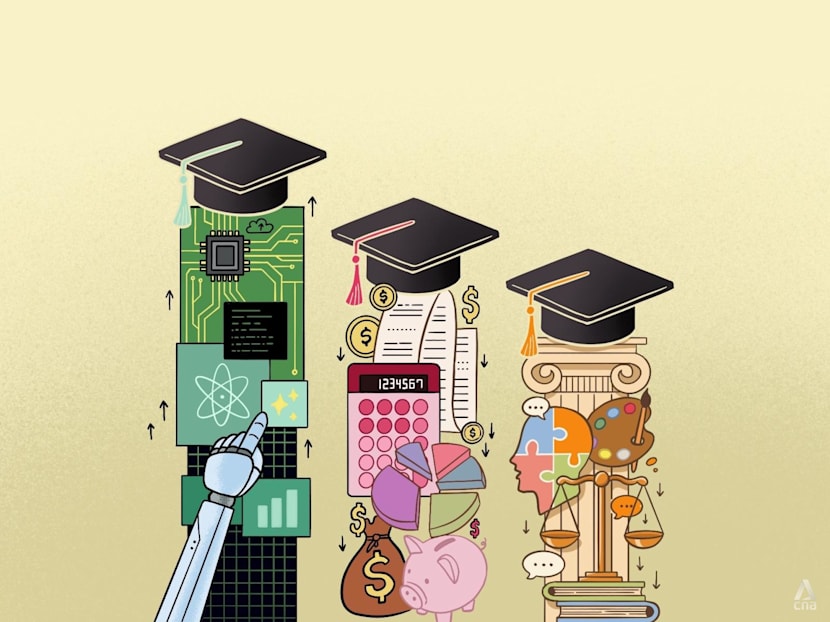
What's at stake when university enrolment trends move sharply in new directions? CNA TODAY explores.
͏ ͏ ͏ ͏ ͏ ͏ ͏ ͏ ͏ ͏ ͏ ͏ ͏ ͏ ͏ ͏ ͏ ͏ ͏ ͏ ͏ ͏ ͏ ͏ ͏ ͏ ͏ ͏ ͏ ͏ ͏ ͏ ͏ ͏ ͏ ͏ ͏ ͏ ͏ ͏ ͏ ͏ ͏ ͏ ͏ ͏ ͏ ͏ ͏ ͏ ͏ ͏ ͏ ͏ ͏ ͏ ͏ ͏ ͏ ͏ ͏ ͏ ͏ ͏ ͏ ͏ ͏ ͏ ͏ ͏ ͏ ͏ ͏ ͏ ͏ ͏ ͏ ͏ ͏ ͏ ͏ ͏ ͏ ͏ ͏ ͏ ͏ ͏ ͏ ͏ ͏ ͏ ͏ ͏ ͏ ͏ ͏ ͏ ͏ ͏
Dear readers,
As artificial intelligence is increasingly reshaping jobs, it should come as no surprise that enrolment patterns across universities are changing. A study by the Institute of Singapore Chartered Accountants found that accountancy enrolment fell by more than 10 per cent between 2018 and 2023. At the same time, demand for tech-related courses has surged: At the National University of Singapore, combined enrolment in computing and computer engineering rose about 31 per cent from 2021 to 2025. At Nanyang Technological University, demand for computer science and computer engineering courses increased 26 per cent over the same period, while at Singapore Management University enrolment in its computer science programme more than doubled from 246 students in 2021 to 569 in 2025. Such shifts reflect rational responses to wage premiums and industry demand. But over the longer term, economists warn that sustained declines in other disciplines could narrow Singapore's talent base, reduce sectoral diversity and weaken economic resilience. In this week's Big Read, CNA TODAY explores the question: With its small population, how should Singapore align university intakes with its increasingly complex economic needs?
Yours faithfully,
Yasmine Yahya
Deputy Chief Editor, CNA Digital (TODAY, Lifestyle & Luxury)
|
|
|
| ADVERTISEMENT  | | |
|
|
| ADVERTISEMENT  | | |
|
|
| Mediacorp Pte Ltd, 1 Stars Avenue, Singapore 138507 | | |
|
|
|