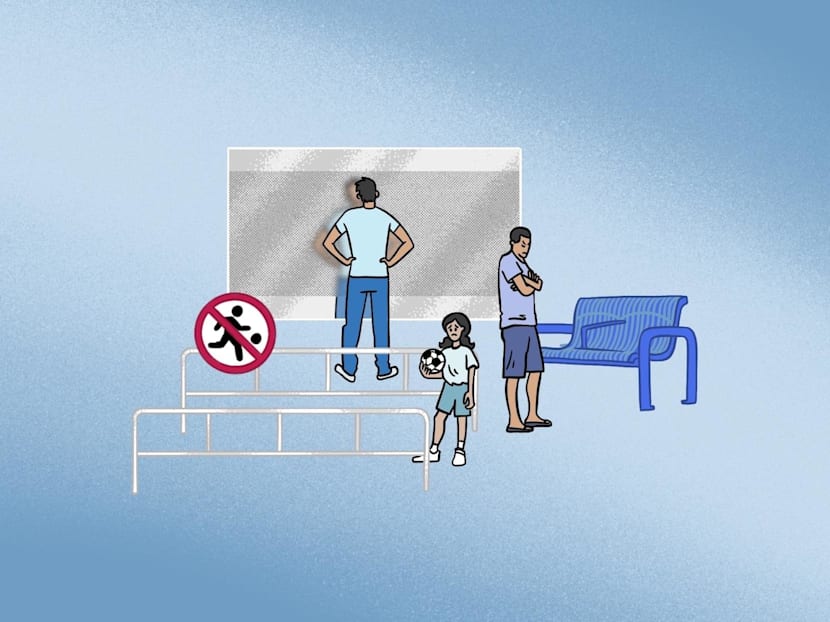
Dancers along a linkway and kids playing at the void deck could be a nuisance or a vibrant community - depending on your perspective.
͏ ͏ ͏ ͏ ͏ ͏ ͏ ͏ ͏ ͏ ͏ ͏ ͏ ͏ ͏ ͏ ͏ ͏ ͏ ͏ ͏ ͏ ͏ ͏ ͏ ͏ ͏ ͏ ͏ ͏ ͏ ͏ ͏ ͏ ͏ ͏ ͏ ͏ ͏ ͏ ͏ ͏ ͏ ͏ ͏ ͏ ͏ ͏ ͏ ͏ ͏ ͏ ͏ ͏ ͏ ͏ ͏ ͏ ͏ ͏ ͏ ͏ ͏ ͏ ͏ ͏ ͏ ͏ ͏ ͏ ͏ ͏ ͏ ͏ ͏ ͏ ͏ ͏ ͏ ͏ ͏ ͏ ͏ ͏ ͏ ͏ ͏ ͏ ͏ ͏ ͏ ͏ ͏ ͏ ͏ ͏ ͏ ͏ ͏ ͏
Dear readers,
A recent move to frost the glass walls along the underground linkway at Bayfront MRT drew complaints from dancers who have long used the space as a makeshift practice studio. But a Marina Bay Sands spokesperson said the decision had been made because the dancers were increasingly blocking pedestrian flow in a high-traffic area. Urban design experts say this is but one example of the kind of balancing act that architects, designers and the people who manage our public spaces have to conduct. How do you ensure a space remains conducive for the majority, while also fostering vibrancy and connectedness? Similar debates have been had over things such as bench dividers and void deck barriers. In this week's Big Read, CNA TODAY explores how seemingly small design choices in public spaces quietly shape who belongs, who is pushed away and ultimately, what kind of community is being nurtured as a result. Yours faithfully, Yasmine Yahya
Deputy Chief Editor, CNA Digital (TODAY, Lifestyle & Luxury) |
|
|
| ADVERTISEMENT  | | |
|
|
| ADVERTISEMENT  | | |
|
|
| Mediacorp Pte Ltd, 1 Stars Avenue, Singapore 138507 | | |
|
|
|